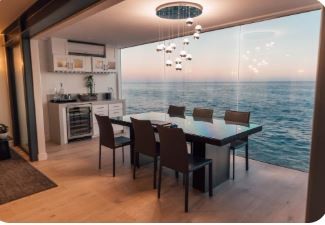
Casa Decor – The Best Online Shop for Elegant Vase Decor
Casa Decor is the best online shop for premium vase decor, offering a perfect blend of style, quality, and affordability. From modern minimalist vases to elegant artistic designs, Casa Decor enhances every corner of your home. Ideal for living rooms, bedrooms, and offices, these vases add charm and sophistication to any interior. Shop online at Casa Decor for beautifully crafted vase decor that complements both contemporary and classic home styles.
https://www.casadecor.co.in/collections/vases
Lightweight Materials Reshape Transportation: Insights on North America’s Composites Market
North America Transportation Composites Market Poised for Steady Growth, Driven by Lightweighting Demands and Roadway Applications
The North America Transportation Composites Market, a critical enabler of advanced material innovation in automotive and aerospace sectors, is on a path of steady expansion. Valued at $10.32 billion in 2024, the market is projected to grow to $15.24 billion by 2032, advancing at a compound annual growth rate (CAGR) of 5%. This growth is primarily fueled by the relentless industry drive for lightweighting to enhance fuel efficiency and performance, though it navigates significant challenges including environmental regulations and material standardization issues.
Purchase This Research Report at up to 30% Off @ https://www.stellarmr.com/repo....rt/req_sample/North-
1. Market Estimation and Core Definition
Transportation composites are advanced materials combining two or more constituents—typically a high-strength fiber and a polymer matrix—to create a superior-performance material. In the transportation sector, they are prized for properties such as high strength-to-weight ratio, low density, corrosion resistance, and design flexibility. These materials are extensively used across automotive machinery, internal panels, aerospace structures, marine vessels, and rail components. The North American market's valuation reflects the consumption of these materials in manufacturing vehicles and transport equipment to meet stringent efficiency and emissions standards.
2. Market Growth Drivers and Key Opportunity
The fundamental driver for this market is the imperative for vehicle lightweighting. As manufacturers across automotive and aerospace strive to improve fuel economy, reduce emissions, and enhance performance, composites offer a vital solution by significantly reducing component weight without compromising strength. This is especially critical for the burgeoning electric vehicle (EV) segment, where reducing vehicle mass directly extends driving range. A significant opportunity lies in the road transportation sector, which is the fastest-growing end-user segment. The demand for composites in cars, trucks, buses, and commercial vehicles is surging as original equipment manufacturers (OEMs) leverage these materials for both interior and exterior components to meet tough environmental regulations. Government initiatives, such as the U.S. Department of Energy's funding for EV research, further bolster this long-term growth trajectory.
3. Emerging Trends Shaping the Future
The market's evolution is being shaped by material innovation and shifting regulatory landscapes. A key trend is the growing focus on thermoplastic composites. Unlike traditional thermoset composites, thermoplastics are reformable, recyclable, and suitable for high-volume production, aligning with both sustainability goals and manufacturing scalability needs. Concurrently, the market faces a counter-trend: increasingly strict environmental policies around plastic waste and end-of-life disposal are placing composite materials under greater scrutiny, pushing the industry toward more sustainable life-cycle solutions. Finally, strategic industry collaboration is accelerating innovation, as seen in partnerships like Hexcel and Arkema's joint project to develop advanced materials for aerospace, indicating a trend towards combining expertise to overcome technical and cost barriers.
Purchase This Research Report at up to 30% Off @ https://www.stellarmr.com/repo....rt/req_sample/North-
4. Segmentation Analysis
The market structure reveals distinct dynamics across two primary segments:
By Type: The market is divided into Thermoset and Thermoplastic composites. Thermosets are traditionally dominant, valued for their high-temperature stability and structural performance. However, the Thermoplastic segment is gaining prominence due to its recyclability, reformability, and suitability for faster, more automated manufacturing processes, representing a significant shift in material preference.
By End User: The Roadways segment is the fastest-growing and most significant consumer of transportation composites. This encompasses the automotive industry's broad use of composites to lightweight passenger cars, commercial trucks, and buses. Other key segments include Aerospace & Defense and Marine, which utilize composites for their high-performance demands.
5. Country-Level Analysis for the USA and Germany
As a region-specific report, the analysis focuses on the United States, Canada, and Mexico. The United States is the undisputed leader and innovation hub of the North American market. It is home to major aerospace OEMs, a vast automotive industry, and leading material science corporations. Substantial investments in EV development and a strong focus on advanced manufacturing solidify its dominant position. The report does not provide a separate analysis for Germany, as it is outside the defined scope. However, Germany's influence is noted through key market players like Henkel AG & Co. KGaA, a major global materials supplier active in the North American region.
6. Competitive Landscape Analysis
The North America Transportation Composites Market features a mix of specialized testing laboratories, global chemical conglomerates, and material suppliers. Key players identified include INTERTEK GROUP PLC and Instron Corporation, which provide critical composite testing and certification services. Material suppliers like Henkel AG & Co. KGaA (Germany) are also pivotal. The competitive landscape is characterized by a strong focus on research and development and strategic partnerships to develop next-generation materials, as evidenced by recent collaborations between giants like Hexcel and Arkema. Competition centers on technological innovation, the ability to meet stringent performance standards, and developing cost-effective solutions for mass production, particularly for the automotive industry.
7. Press Release Conclusion
The North America Transportation Composites Market is advancing on a stable, innovation-driven path, fundamentally supported by the structural needs of modern transportation. The dual engines of automotive lightweighting—for both traditional and electric vehicles—and continuous aerospace innovation will sustain core demand. While the industry must successfully navigate the headwinds of environmental regulation and standardization challenges, the long-term trends are favorable. The shift towards more versatile and recyclable thermoplastic materials and the deepening collaboration across the supply chain point to a market evolving for greater sustainability and scalability. Companies that lead in material science innovation, adapt to circular economy principles, and forge strong partnerships will be best positioned to capitalize on the opportunities as composites become even more integral to building the next generation of efficient and high-performance vehicles.
About us
Phase 3,Navale IT Zone, S.No. 51/2A/2,
Office No. 202, 2nd floor,
Near, Navale Brg,Narhe,
Pune, Maharashtra 411041
sales@stellarmr.com
Professional Organic Search Optimization to go global
Need quality organic search engine optimization solutions? Our search engine optimization professionals will provide you with specific plans in order to improve the ranking of your web-site in London, New York, Sydney, etc. You can have low prices and consultancy whether you are just starting or a manufacturer. Start now by paying a visit to Webastr so as to get the best in SEO solutions.
Visit Now: https://webastr.com/
Ergonomics and Innovation Drive Growth in the Office Chairs Market
Global Office Chairs Market Poised for Steady Growth, Driven by Ergonomics and Remote Work Trends, Projected to Reach USD 22.22 Billion by 2032
A comprehensive new analysis of the global office chairs market reveals a period of stable, growth-oriented expansion, driven by a fundamental shift towards employee well-being and the evolving modern workplace. The market, valued at USD 14.69 billion in 2024, is expected to grow at a compound annual growth rate (CAGR) of 5.31% through 2032, reaching nearly USD 22.22 billion. This consistent growth underscores the office chair's transformation from a basic piece of furniture into a critical tool for productivity, health, and corporate culture, responding to the demands of corporate offices, remote work, and flexible shared spaces.
Purchase This Research Report at up to 30% Off @ https://www.stellarmr.com/repo....rt/req_sample/Office
Market Estimation & Definition
The global office chairs market encompasses specialized seating furniture engineered for comfort and support during extended periods of sitting in professional environments. Defined by features such as adjustable height, lumbar support, armrests, and swivel bases, these chairs are designed to promote ergonomic well-being and productivity. The market's solid valuation of USD 14.69 billion in 2024 reflects its essential role in global business infrastructure. The projected growth to USD 22.22 billion by 2032 signals a sustained focus on investing in workplace quality, driven by the rise of knowledge work, health-conscious corporate policies, and the normalization of dedicated home offices.
Market Growth Drivers & Opportunity
The market's primary growth engine is the increasing global emphasis on workplace health, safety, and ergonomics. Awareness of the link between proper seating, reduced musculoskeletal issues, and enhanced productivity is compelling organizations across sectors to invest in high-quality, supportive chairs. This trend is powerfully amplified by the enduring prevalence of remote and hybrid work models, which has created a massive, sustained demand for professional-grade home office furniture, moving purchases from corporate procurement to individual consumers.
A significant market opportunity lies in technological innovation and sustainable design. The development of "smart" chairs with integrated sensors for posture monitoring and wellness feedback represents a high-growth frontier. Concurrently, rising environmental consciousness is driving demand for chairs made from recycled, recyclable, and sustainably sourced materials, allowing manufacturers to differentiate through eco-friendly credentials. Furthermore, the proliferation of coworking spaces and the trend toward collaborative, flexible office layouts create consistent demand for versatile, stylish, and durable seating solutions that can adapt to various uses and users.
What Lies Ahead: Emerging Trends Shaping the Future
The future of the office chairs market will be characterized by hyper-personalization, smart integration, and a focus on holistic wellness. Expect accelerated development of chairs with advanced ergonomic adjustability and adaptive technologies that respond dynamically to a user's movements, promoting active sitting and reducing fatigue. Integration with digital ecosystems and the Internet of Things (IoT) will grow, with chairs providing data on usage patterns to inform workplace design and individual health insights.
Furthermore, augmented reality (AR) and virtual reality (VR) are poised to revolutionize the sales channel, enabling customers to visualize and customize chairs in their own virtual workspace before purchasing online. Material innovation will continue, with a strong focus on advanced meshes for breathability, durable sustainable fabrics, and new composite materials that reduce weight without sacrificing strength. However, the industry must continue to balance the cost of advanced features with market accessibility and educate a broader audience on the long-term value proposition of investing in ergonomic seating.
Purchase This Research Report at up to 30% Off @ https://www.stellarmr.com/repo....rt/req_sample/Office
Segmentation Analysis
The market is segmented by Product Type, Material, and Sales Channel, with clear leaders emerging in each category.
By Product Type: Executive Chairs have traditionally dominated, prized for their premium materials and association with status in corporate settings. However, Ergonomic Chairs are the fastest-growing segment and gaining significant market share, driven by widespread awareness of health benefits and their adoption across all levels of an organization, not just leadership.
By Material: Key materials include Mesh (valued for breathability and modern aesthetics), Leather (associated with premium executive chairs), Fabric, and Plastic. The choice is often dictated by price point, desired comfort, durability, and design language.
By Sales Channel: The market is divided between Offline (specialty furniture stores, office supply dealers) and Online sales. The online channel is experiencing rapid growth, fueled by the convenience of home shopping for remote workers and direct-to-consumer brands, though offline channels remain crucial for B2B contracts and in-person testing.
Country-Level Analysis for the USA and Germany
The competitive landscape is anchored by iconic design-led manufacturers and large-scale commercial furniture corporations.
In the United States, the heart of the dominant North American market, industry leaders include Herman Miller, Steelcase, Haworth Inc., and HNI Corporation. The U.S. market is characterized by high corporate spending on workplace design, a strong culture of ergonomic awareness, and significant investment in R&D for innovative seating technologies.
In Germany, a major European market known for engineering excellence, companies like Topstar GmbH compete. The European market emphasizes functional design, durability, and stringent environmental and safety standards, with a strong base in contract furniture for corporate and public sectors.
Globally, key players from the Asia-Pacific region, such as OKAMURA CORPORATION (Japan) and UE Furniture Co. Ltd. (China), are significant manufacturers and represent the fastest-growing regional market, driven by rapid urbanization, expanding corporate sectors, and growing investment in modern office infrastructure.
Competitive Analysis
Competition in the office chairs market is intense and multi-dimensional. Established giants compete on brand heritage, design innovation, and deep relationships with corporate clients and architects. A critical battleground is technological leadership in ergonomics and smart features, with companies racing to patent new mechanisms for lumbar support, tilt, and adaptive seating. Sustainability has become a key competitive differentiator, with companies marketing chairs made from ocean plastics, recycled aluminum, and fully recyclable components to appeal to environmentally conscious buyers and corporations with ESG (Environmental, Social, and Governance) mandates.
Strategic growth is increasingly achieved through collaborations with high-profile designers (like Herman Miller with Naoto Fukasawa) to create iconic products, and partnerships to tap into new sales channels, such as the collaboration between Ubique Group and Martha Stewart targeting the home office segment. Success also depends on offering a diverse portfolio that spans premium, mid-range, and value segments to capture market share from global corporations down to individual remote workers.
Press Release Conclusion
The trajectory of the global office chairs market points toward steady, innovation-driven growth, approaching USD 22.22 billion by 2032. This expansion is fundamentally linked to a permanent elevation in how businesses and individuals value the workspace—whether at a corporate headquarters or in a home office. The chair is no longer just a place to sit; it is recognized as an integral component of health, focus, and professional performance. Future success will belong to companies that can seamlessly blend biomechanical science with aesthetic design, integrate seamlessly into the digital and sustainable future of work, and effectively communicate the tangible return on investment that a high-quality chair delivers in wellness and productivity. For stakeholders, the enduring trend is clear: investing in human-centered design for the workplace is a strategic imperative with a solid and growing market behind it.
About us
Phase 3,Navale IT Zone, S.No. 51/2A/2,
Office No. 202, 2nd floor,
Near, Navale Brg,Narhe,
Pune, Maharashtra 411041
sales@stellarmr.com